

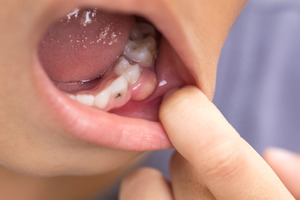
When you’re told that your child has a cavity, you may find yourself being overwhelmed with guilt. As your child’s caregiver, it can be all too easy to wonder, “Could I have prevented this?” However, it’s important to remember that while tooth decay is often preventable, some children are simply more prone to developing it than others. As a parent, you should familiarize yourself with the risk factors for cavities that are outside of your control – as well as the steps you can take to care for your child’s smile.
What Can Put Your Child at a Higher Risk for Cavities?
You’re probably already aware that poor oral hygiene habits and overexposure to sugary foods can significantly increase your child’s chances of developing a cavity. However, there are several other risk factors to take into account:
- Baby Teeth: Children who still have their baby teeth tend to be more likely to develop cavities. This is because the baby teeth have a thinner layer of enamel, giving them less protection against decay.
- Genetics: Sometimes genetics can play a role in making your child more susceptible to cavities and other oral health issues. As an example, some people are born with weaker enamel than others.
- Certain Underlying Conditions: Certain conditions can affect the health of your child’s smile in a variety of ways. For instance, if your child has asthma or ADHD, the medication they take to treat the problem could cause dry mouth as a side effect. Consequently, they may be more likely to develop tooth decay because their mouth is producing less saliva to wash away harmful bacteria.
- Hard-to-Clean Teeth: The molars near the back of your child’s mouth are often difficult to brush thoroughly due to the many pits and grooves they contain. As such, they tend to be more cavity-prone than the other teeth.
What Can You Do If Your Child Gets a Cavity?
As soon as you find out that your child has a cavity, it’s best to have it treated as quickly as possible. Smaller cavities can often be repaired with a tooth-colored filling. However, more extensive decay may require a white zirconia dental crown; this can often be an excellent option for baby teeth.
In addition to getting the treatment your child needs, you should also take whatever steps you can to lower their risk for tooth decay in the future. This means helping them develop good brushing and flossing habits as well as limiting their intake of sugary foods and beverages. It may also be a good idea to ask your dentist about dental sealants, which can cover the crevices on the surface of the molars, thus giving them extra protection against cavities.
In short, if your child gets a cavity, it’s not necessarily your fault as a parent. So instead of dwelling on feelings of guilt, you should focus on doing whatever you can to make sure that your little one’s smile is better protected in the future.
About the Author
Dr. Ben Baghai is a board-certified pediatric dentist with more than 20 years of experience. He studied dentistry at the University of Tennessee at Memphis, and he holds membership with the Texas Academy of Pediatric Dentistry and other professional organizations. He subspecializes in repairing damaged and decayed teeth with beautiful zirconia crowns. If your child has a toothache that might be the result of a cavity, you can schedule an appointment with Dr. Ben at Garland Pediatric Dentistry by visiting his website or calling (972) 674-9966.